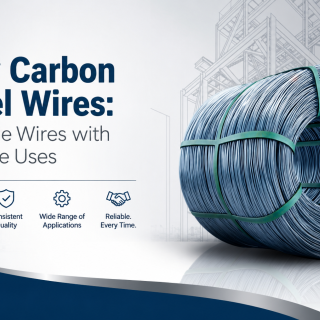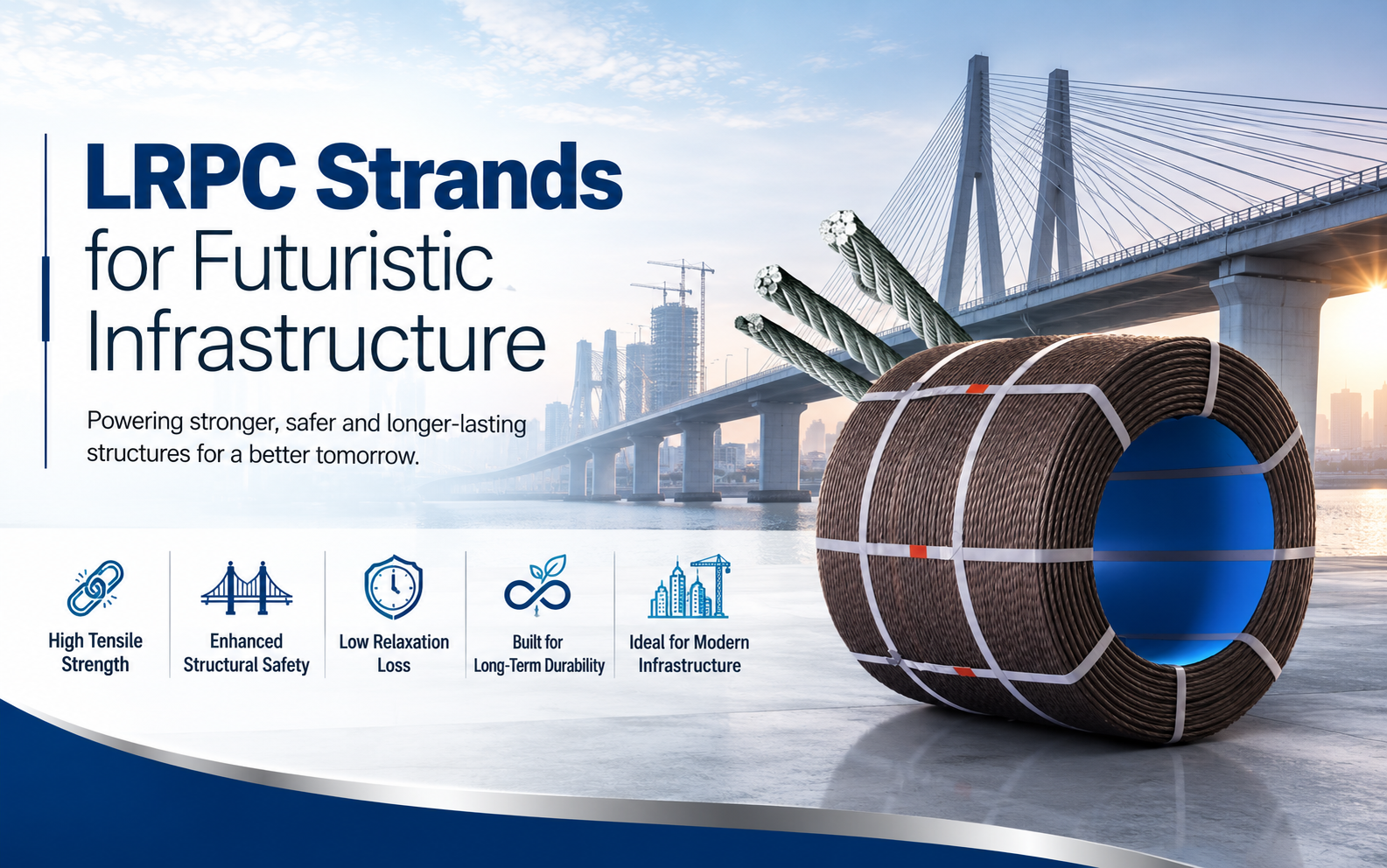
Industrial growth has surpassed previous records, and the infrastructure sector is taking giant steps in terms of growth. In today’s era of demanding infrastructure, industries need structures which are highly durable and strong. With new innovative ideas in the steel industry, LRPC strands (low relaxation prestressed concrete) are of great use. These strands are used by leading infrastructure companies to fulfil the critical building needs. Made from high-quality steel wires, LRPC strands have high tensile strength, better safety, and longevity in large-scale projects. Some widely used LRPC strands include galvanised, coated, and grease-filled LRPC. These variations cater to different environmental conditions and project requirements, ensuring optimal performance and reliability. As the demand for robust infrastructure continues to rise, the adoption of LRPC strands is likely to expand, paving the way for even more advanced construction techniques.
Why do we need LRPC strands?
Many companies have switched from mild steel bars to LRPC stainless steel strands, and their reason is convincing. Mild steel bars are made from low-carbon steel; hence, they have low tensile strength and poor corrosion resistance. On the other hand, using LRPC strands allows the construction of strong, safe, and lighter structures with accelerated construction speed. This simply means that under prolonged high tension, structures made from LRPC strands do not break down or deform. LRPC strands have revolutionised the infrastructure sector by providing better fatigue resistance that supports repetitive loading demands.
Manufacturing of LRPC STRANDS:
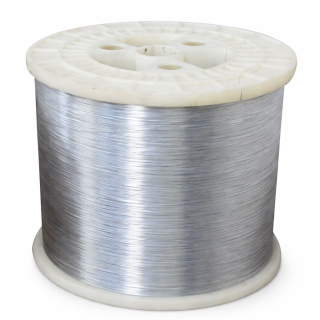
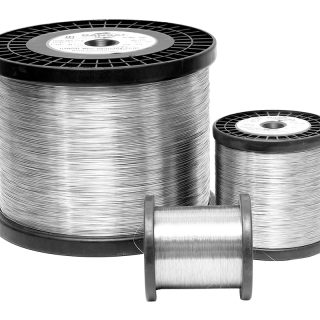
The production of LRPC strands is similar to steel wire manufacturing. The first stage is wire drawing, where steel rods are reduced to fine wires. These wire rods are pulled through smaller and smaller dies to reduce the diameter of the wire. Oil-based and soap-based lubricants are also used during the process of wire drawing to prevent any breakage or damage.
These wires are then twisted together helically to form the core structure. To improve the tensile strength of the strands and reduce the relaxation of the strands, it goes through the heat treatment process. This improves its tensile strength significantly and allows a prestressed wire to lose very little tension over time. At the last step, the LRPC strand undergoes the galvanisation process to give protection against corrosion.
Applications of LRPC strands:
- High-quality mega construction projects
- Heavy bridges and flyovers.
- Metro rails
- Motorways and highways
- High-Rise Buildings
- Power plants
- Dams
- Ground anchors
- Tie-back systems
Growth potential in LRPC strand manufacturing:
The future holds exciting possibilities for LRPC Strands. With advancements in technologies and innovations, manufacturers like Bansal Steel are focusing on improving tensile strength and corrosion resistance. The use of hot-stretching during the manufacturing process can restrict the relaxation losses of the LRPC strands. This simply improves the tension in the strand, and the structure remains intact for a prolonged period of time. LRPC strands are evolving in strength and applications. redefine our understanding of materials and their potential.
Conclusion:
LRPC strands are not confined to a single industry, as their application includes both light and heavy industry. From high-rise residential towers to large commercial complexes, from mega energy projects to giant shipping structures, LRPC strands support every industrial structure. LRPC strands have the potential to shape a better future. Bansal Steel is innovating with time and manufacturing high-quality LRPC strands for use in all kinds of industrial needs.